
Why I'm even talking about AI as a Christian
"One who is faithful in a very little is faithful also in much, and one who is dishonest in a very little is also dishonest in much." (Luke 16:10, ESV)
I use AI every day, for almost everything I build.
By day I run IT and facilities for my full-time employer, spread across multiple locations. Before that I've been an RPN, an emergency medical responder, a firefighter, an electrician, a carpenter, and a software developer. I've built and sold two companies. Right now I'm running something like nine ventures at once: an AI consulting company with my business partner Brendan, a web and software shop, an accessibility SaaS product, a personal app suite I'm getting ready to sell, a build-in-public platform for early-rising entrepreneurs, a music and devotional brand, a full rebuild of my own portfolio, and now this blog. AI touches almost all of it.
I think AI is incredible. I'm not writing this to talk you out of using it.
But somewhere in the middle of building all of that, I noticed I was only asking one question.
What can AI do?
Increasingly, the honest answer is almost anything.
That's when a different question started bothering me.
What should AI do? And more specifically, as a Christian, what should I be doing with it?
Is AI just another powerful tool?
None of my past trades handed me a passive tool. A firefighter's gear can save a house or, used carelessly, destroy one. A carpenter's saw builds something that outlasts him or something that falls down in ten years, depending on whether he cut corners nobody would see at first. The tool was never the moral agent. I was.
AI is obviously more complicated than a hammer or a saw. It reasons, it writes, it can hold a conversation. I don't think that changes the underlying principle. A tool having enormous capability tells me nothing about whether I'm using that capability faithfully.
That's where stewardship comes in.
For me, stewardship starts with a fact I didn't invent and don't get to negotiate: what I have was never ultimately mine. My time isn't mine. My skills aren't mine. My businesses aren't mine. Even the technology sitting on my desk isn't mine in the way I sometimes act like it is. It's on loan, and I'm the one who has to decide how I use it.
If I actually believe that, I can't separate how I use AI from what I believe about God.
Why I don't want to slap Christianity onto AI
Here's what I'm trying to avoid with Faithful Intelligence. I don't want to watch whatever the tech industry does this year, find a verse that sounds related, and call it Christian AI. That's backwards. Scripture should shape how I think about the technology. It shouldn't become decoration for a decision I already made three weeks ago.
I've been reading Gavin Ortlund's book on humility lately, and it's been doing some quiet, uncomfortable work on me. One of the things it keeps pushing me toward is admitting when I don't actually know something instead of performing a certainty I don't have. That matters here, because it would be easy to write a blog that sounds like I've resolved Christian AI ethics. I haven't. So instead of tidy conclusions, I want to keep asking harder questions:
Does this help me love my neighbour, or just extract more out of them?
Does it make me more truthful, or does it make it easier to fake competence I don't have?
Am I handing AI something God actually gave me the responsibility to carry?
If AI hands me five hours back this week, what am I going to do with them?
And the one that stings the most:
Am I using increased capability as an excuse to do more things God never asked me to do?
That last question is personal
I love building things. Always have. Give me a problem and I'm three steps into solving it before I've finished hearing the question.
AI poured gasoline on that instinct. Things that used to take me weeks now get prototyped in an evening. Projects that once needed a team, I can attempt alone. For someone wired the way I am, that's exciting.
It's also dangerous, because "I can build this" and "I should build this" are two completely different sentences, and AI has made it very easy to skip straight past the second one.
I've learned that the hard way. I've sold two companies. I'm currently running close to nine things at once. From the outside, that can look ambitious. Sometimes it is. Sometimes, if I'm honest, it's just been motion. Proverbs 19:2 has been landing differently for me lately:
"Desire without knowledge is not good, and whoever makes haste with his feet misses his way." (Proverbs 19:2, ESV)
AI makes it remarkably easy to make haste with my feet. It removes almost every piece of friction that used to force me to slow down and ask whether a thing deserved to be built at all.
The verse this whole blog stands on
If Faithful Intelligence has a foundation, it's this:
Grounding Scripture: "Moreover, it is required of stewards that they be found faithful." (1 Corinthians 4:2, ESV)
Not clever. Not efficient. Not fast. Faithful.
That word is doing a lot of work in my life right now. My priority order, on my best days, runs God first, then my wife Elizabeth, then our three boys, then extended family, then work, then whatever's left over for me. AI doesn't rearrange that order on its own. It just makes it a lot easier to quietly reorder it without noticing, because it removes the friction that used to slow me down enough to catch myself.
Why Faithful Intelligence exists
I'm not starting this because I've solved any of it. I'm starting it because I think these are questions Christians building with AI need to wrestle with, and I'm wrestling with them in real time, in public, using my actual businesses and my actual family as the material.
I want to explore AI without fear of it and without worshipping it. I want to build useful things, keep growing the ventures God has put in front of me, and help other people recover time from work that never needed a human doing it. I also want to keep asking the harder question underneath all of it.
Not just can we?
Are we being faithful?
That's the whole project. Christian wisdom for the age of AI. Not because I've arrived. Because I think we need to start asking better questions, together, before the technology answers them for us by default.
Frequently asked questions
What is a Christian perspective on AI?
A Christian perspective on AI treats the technology as a tool entrusted to people who are accountable to God for how they use it. It asks not only what AI can do, but what a faithful steward should do with the capability, time, and influence AI provides.
Is AI good or bad according to the Bible?
Scripture doesn't address AI directly, but it speaks constantly about how power, tools, time, and resources should be used. The Bible treats tools as morally neutral and holds the person using them responsible for the outcome.
What does Christian stewardship of technology actually mean?
It means recognizing that time, skill, and opportunity, including access to AI, belong to God and are only entrusted to us for a season. Faithful stewardship asks whether a use of technology serves God and neighbour, not just whether it's efficient or possible.
Start here: the free F.A.I.T.H. AI Stewardship Audit is twenty questions about your week, not about technology. About five minutes, no cost, and your answers stay on your device.
I'm Dave. I lead IT and facilities for my full-time employer, run an AI consulting company with my business partner Brendan, and build software, music, and ministry projects in the hours before my family wakes up.
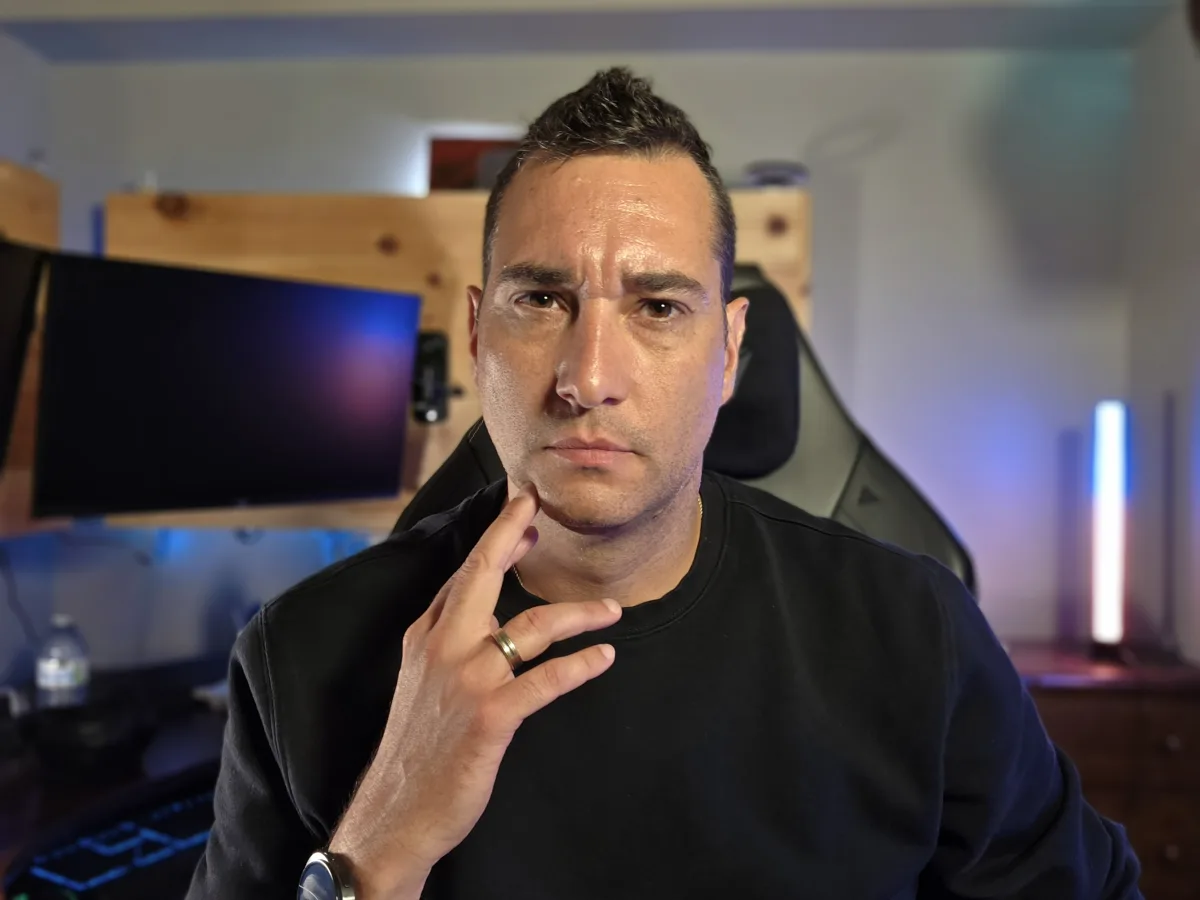
Written by Dave Birnie
Software and AI systems builder, husband, and father of three. Exploring how Christian faith shapes the way we use technology.
Meet Dave